AIGP | Featured | Study Tips
Ultimate AIGP Study Guide 2026
AIGP study guide for 2026: the four domains, exam rules, books, practice exams and what four routes to readiness cost.

AIGP study guide for 2026: the four domains, exam rules, books, practice exams and what four routes to readiness cost.
Every AI governance programme plans the launch. Far fewer plan the stop. Two instruments treat the ability to halt a system as something built in advance rather than improvised, and the AIGP exam tests the difference between suspending, recalling and decommissioning.

Govern, Map, Measure and Manage look like a sequence and are not one. This piece works through what each function of the NIST AI RMF actually covers, why governance sits across the other three, and how the distinction shows up in AIGP questions.

A model card documents an AI model’s purpose, performance across segments and known limitations. This article traces the idea to its 2019 origin, separates the card from the AI Act technical file and shows how AIGP definition questions use its neighbours as distractors.

EU copyright law permits commercial mining of lawfully accessible works, and lets rightsholders switch that permission off. AIGP candidates need the mechanics of the reservation, and what Article 53 of the AI Act requires of model providers.

Directive (EU) 2024/2853 makes software a product from 9 December 2026, so an AI system falls inside strict product liability. This piece covers what a claimant can recover, how the disclosure and presumption rules work, and what happens when a model keeps learning.

Where a model runs and how far it is adapted are governance decisions before they are technical ones. Cloud, on-premise and edge against as-is use, fine-tuning, retrieval and agentic designs, plus the point in the AI Act where adapting a system makes you its provider.

A question can have four options that are all things a real organisation would do, for four different actors. Finding the right role before you read the options removes the near-misses that usually survive to the final two. Here is the habit, and a drill to build it.
Rules only attach once you have classified the object. This is the definition question hiding inside IAPP scenarios, how to spot it before you read the options, and a five-minute drill that retrains the habit on questions you have already answered.

The exam sometimes asks you to find the wrong option, not the right one. These negative questions punish autopilot. Here is how to spot the flip word, score each option true or false and tell an odd-one-out question from a ranking one.
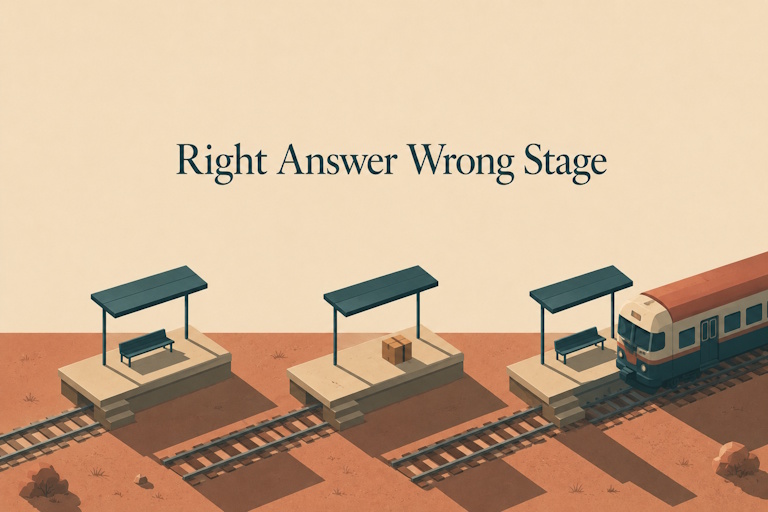
Certification distractors are usually true statements about the wrong moment. This method separates knowledge errors from stage errors, and turns each domain into a timeline you can read under exam pressure.
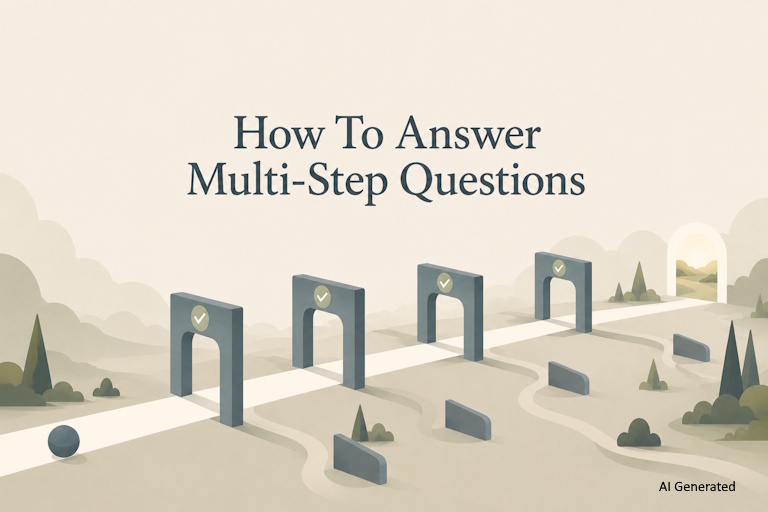
Some exam questions test whether you can apply a defined test in the right order, not just recall a fact. Here is how to spot these multi-step questions, run the test in order, dodge the distractor built to catch you and turn them into reliable marks.
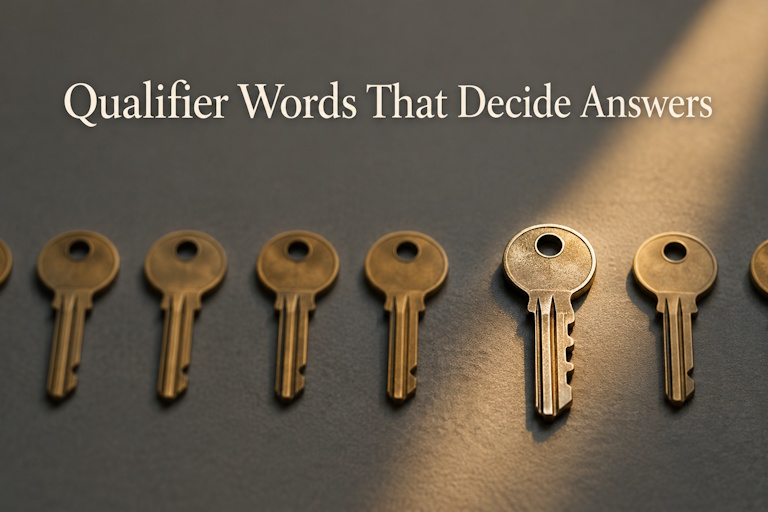
You can know the material cold and still miss the mark, because the answer often hides in one small word. This is the habit of spotting the qualifier words that decide a question, with a three-step reading method you can use on any IAPP paper.

You can spot the right rule, answer it cleanly, and still lose the mark to a second duty stacked underneath. This is the method that catches it: a three-step pause that turns a too-simple-looking stem into a checked one, before you ever read the options.

IAPP exams hide their marks in look-alike answers built to resemble the right one. Here is a calm, repeatable way to separate them: contrast before you choose, name the one deciding detail, and train the habit on confusable pairs well before exam day.

The final week before an IAPP exam is for consolidation, not new material. A calm seven-day routine built on retrieval, targeted repair, logistics and rest, with a note on why a rested reader scores higher.

The topics that feel urgent are rarely the ones that score. This guide explains why foundational domains carry the most reliable marks on any IAPP exam, how to separate exam-stable law from moving news, and a weekly breadth check so no domain goes cold.
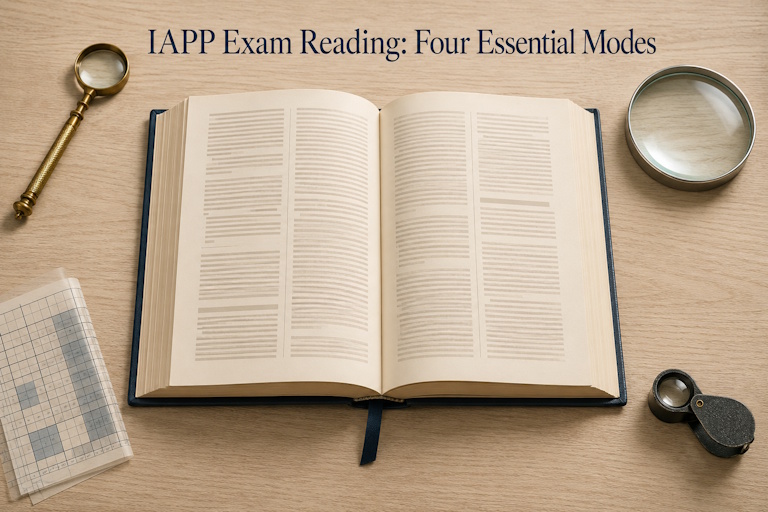
The word “Article” in a question stem triggers panic, then memorisation guilt. Both are solvable. The IAPP exam tests four distinct reading modes, not the full text of any regulation. Recognising which mode the stem is in is the practical skill that closes the gap.
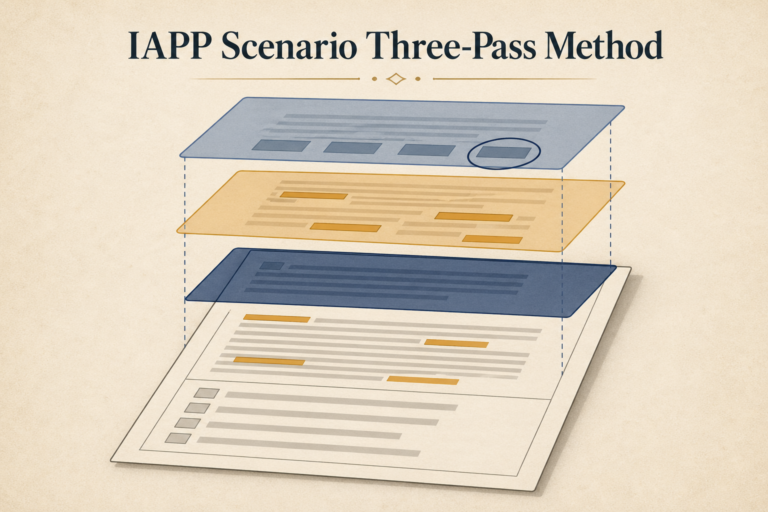
IAPP scenario questions punish candidates who read for facts before reading the question stem. The three-pass method, working stem first, body second and trap third, turns scenarios from random difficulty into a finite, repeatable skill any candidate can practise.
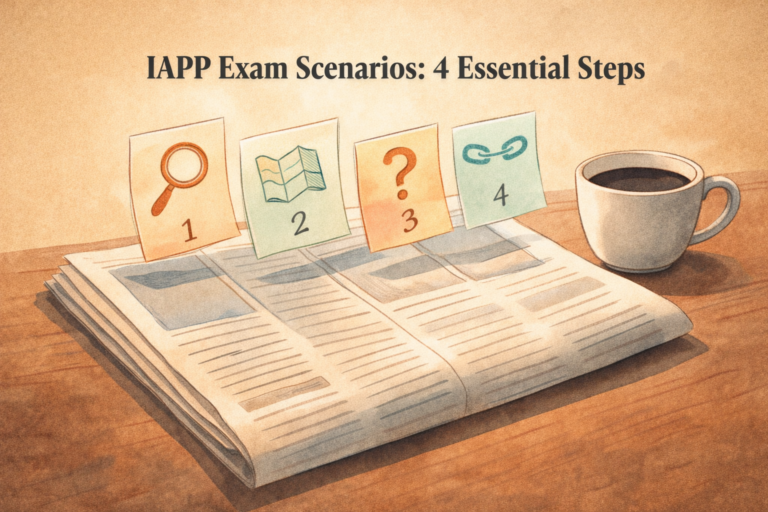
A four-step method for turning regulatory news into IAPP exam scenario practice. Works for any certification. Takes fifteen minutes per week.