How to study for the CIPT
The CIPT asks how privacy works inside systems. Here is what each of its five domains covers, how long a beginner needs, how the questions work and what four routes to readiness cost.

The CIPT asks how privacy works inside systems. Here is what each of its five domains covers, how long a beginner needs, how the questions work and what four routes to readiness cost.

Seven foundational principles, and the fourth one is the argument. Full functionality means positive-sum rather than zero-sum, which rules out the trade-off framing product teams reach for first. This piece works through what that principle demands and how the exam tests it.
Seven letters, seven privacy threat types, and two sets of names in circulation. This piece works through what each LINDDUN category covers, how the method runs against a data flow diagram, and the one thing the framework deliberately leaves to you.

Dark patterns are interface designs that steer people into unintended choices about their data. This article works through the EDPB and FTC catalogues, the honest design alternatives and the way CIPT questions describe an interface and ask what it exemplifies.
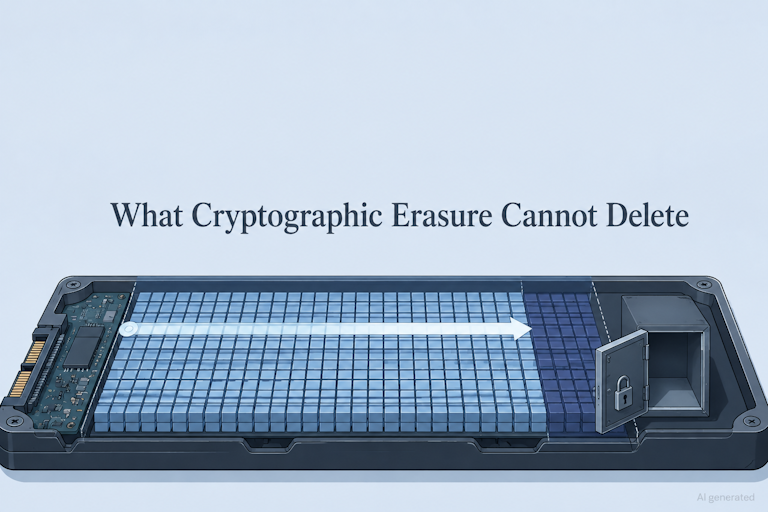
Deleting the key is faster than wiping the drive, and it fails silently when three conditions are not met. What NIST now says about cryptographic erasure, and how it meets a GDPR erasure request.
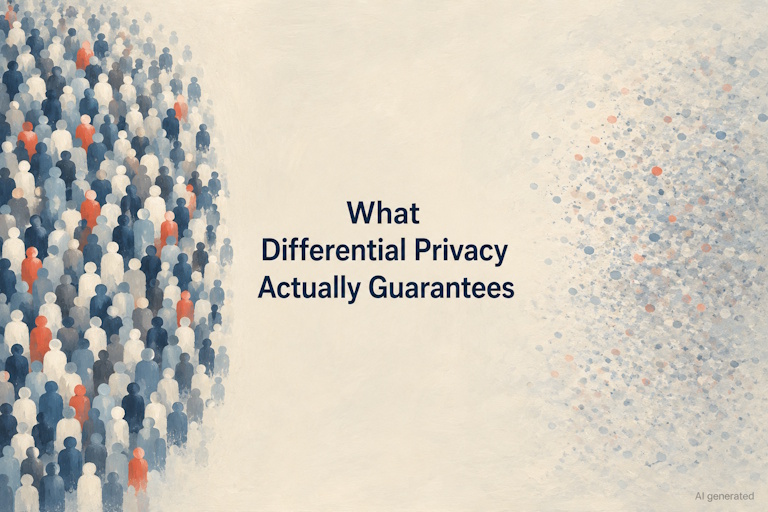
A claim to use differential privacy means nothing without two numbers. This piece explains what epsilon controls, why the privacy unit decides who is actually protected, and how the guarantee differs from de-identification.
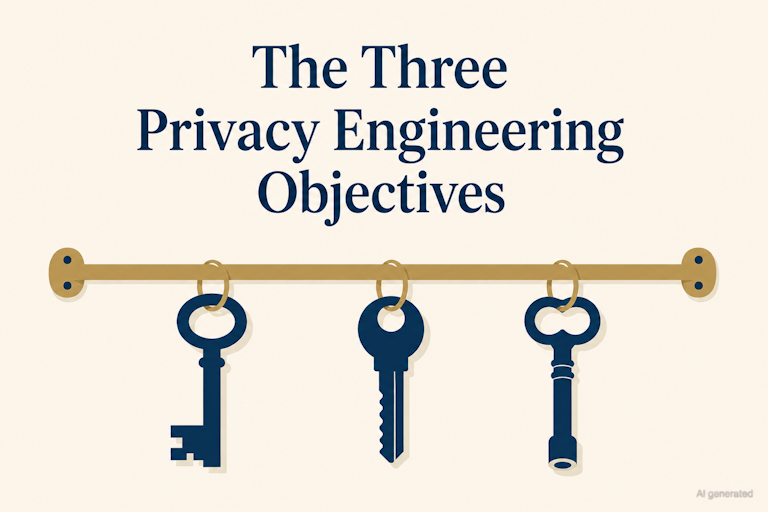
Confidentiality, integrity and availability describe a system that resists attack. They say nothing about one that works exactly as designed and still exposes people. NIST wrote three further objectives for that gap, and knowing which capability is missing is how scenario questions get answered.
The IAPP has announced no Body of Knowledge update for autumn 2026. The current versions for CIPP/E, CIPP/US, CIPM and CIPT, what changed in each, what the 90-day notice rule guarantees, and how to check which version you are holding.

A question can have four options that are all things a real organisation would do, for four different actors. Finding the right role before you read the options removes the near-misses that usually survive to the final two. Here is the habit, and a drill to build it.
IAPP exams hide their marks in look-alike answers built to resemble the right one. Here is a calm, repeatable way to separate them: contrast before you choose, name the one deciding detail, and train the habit on confusable pairs well before exam day.

The final week before an IAPP exam is for consolidation, not new material. A calm seven-day routine built on retrieval, targeted repair, logistics and rest, with a note on why a rested reader scores higher.

The topics that feel urgent are rarely the ones that score. This guide explains why foundational domains carry the most reliable marks on any IAPP exam, how to separate exam-stable law from moving news, and a weekly breadth check so no domain goes cold.
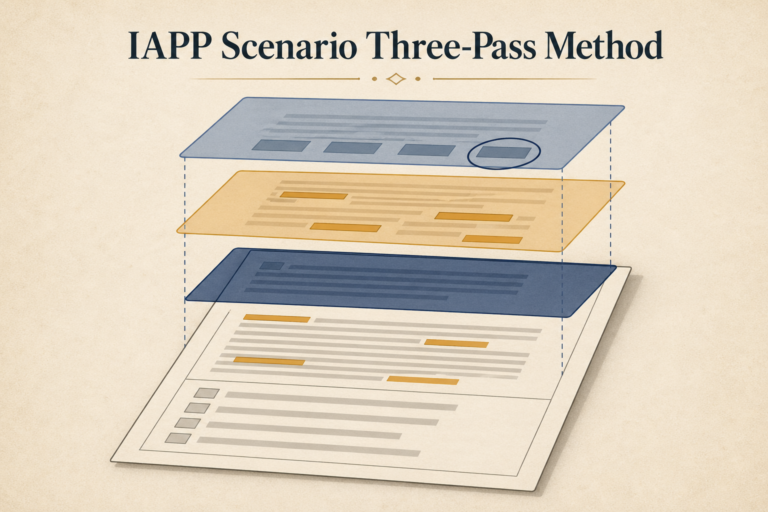
IAPP scenario questions punish candidates who read for facts before reading the question stem. The three-pass method, working stem first, body second and trap third, turns scenarios from random difficulty into a finite, repeatable skill any candidate can practise.
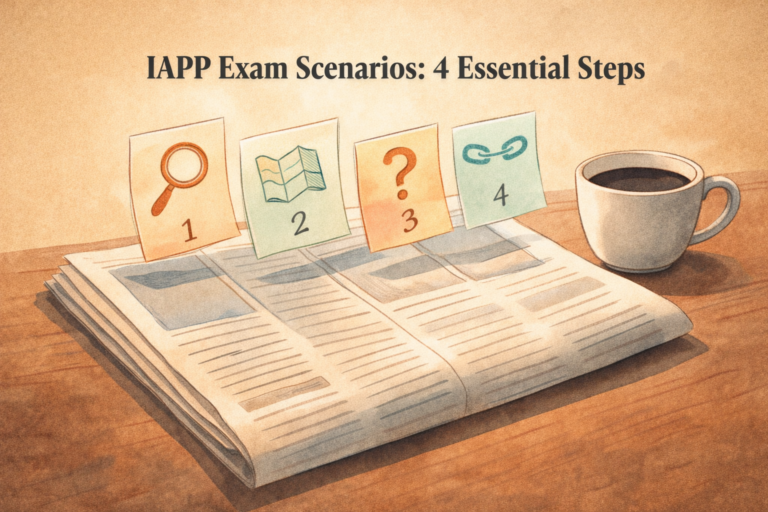
A four-step method for turning regulatory news into IAPP exam scenario practice. Works for any certification. Takes fifteen minutes per week.
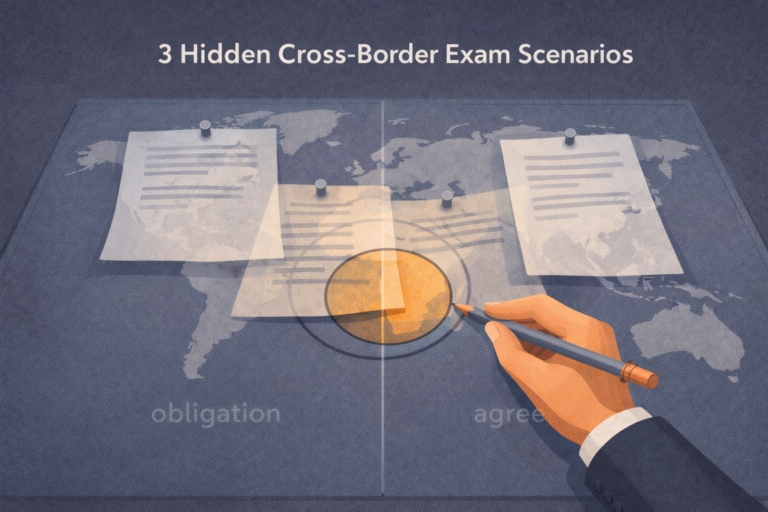
Cross-border exam scenarios catch candidates who identify one legal framework and miss the second. A jurisdiction mapping method fixes that in fifteen seconds.
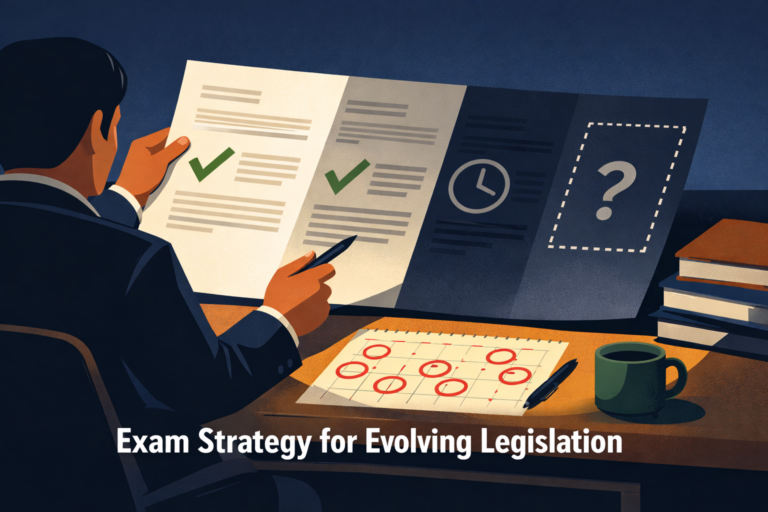
Candidates who study the substance of a law but skip the status check will confidently answer questions about obligations that do not yet exist. One reasoning pause changes everything. Here is how to build it into your exam technique for CIPP/E and AIGP.

Studying on a budget is a challenge for many professionals pursuing certifications like CIPP/E, CIPM, or AIGP, especially in the privacy and data protection fields. As you may already know, certifications from the International Association of Privacy Professionals (IAPP) come with a significant financial commitment. Exam fees alone start at $550, and additional costs like…

*** The latest round of exam changes has been announced for October 2023 and an updated version of this article on CIPP exam updates is now available*** This year, the annual IAPP exam updates go into effect on October 3rd and therefore, new Body of Knowledge documents are now available for all designations. We have…

Writing for IAPP Certification Exams: Credentialing the Next Generation of Privacy Professionals is the title of a recent video posted by the IAPP on LinkedIn. The session was moderated by Bridget Morang, (Senior Certification Operations Manager) and the speakers were Stacie Cocola (Certification Exam Manager) and Susan Tierney (Senior Certification Program Developer). The IAPP always produces…

IAPP Certification Director Doug Forman and Training Director Marla Berry went live on LinkedIn on October 14th 2020 to answer questions about IAPP Certifications & Training. It was a fantastic Q&A session and we have summarised some key points from the discussion below, including the announcement of a new CIPP/E practice exam coming in 2021!…